Horizon Europe in Luxembourg: 537 proposals funded, why not yours?
Luxembourg organisations have secured €318.6 million in Horizon Europe proposals. With new Bridging Actions opening in January 2027 and FP10 on the horizon, here is what applicants need to know now.
 Emilio
26/11/2026
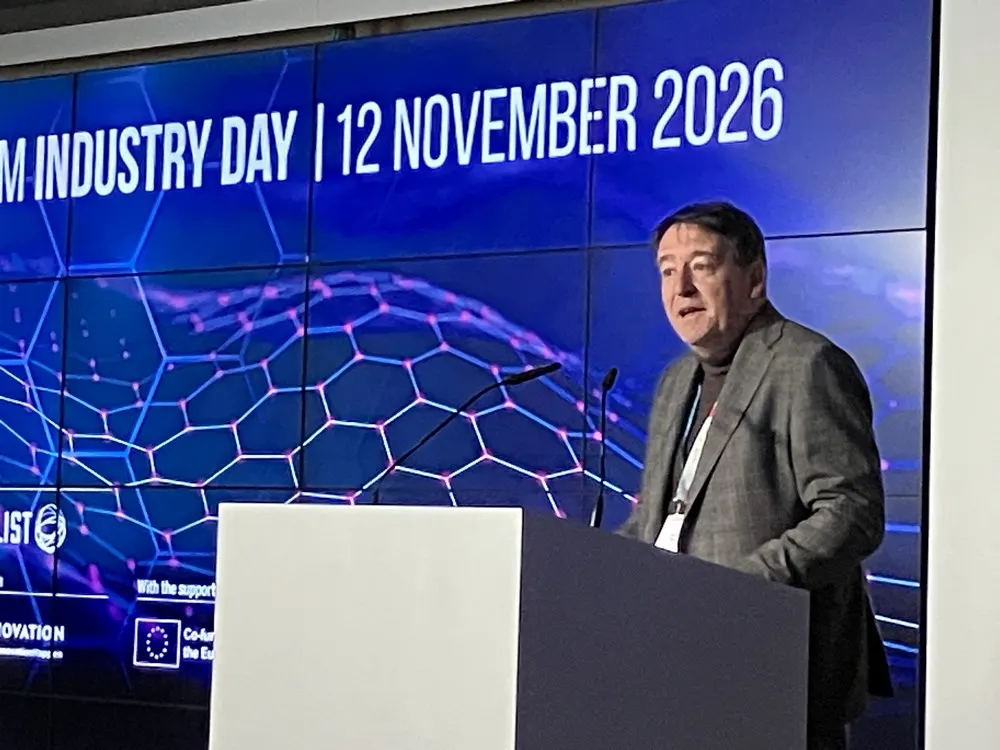
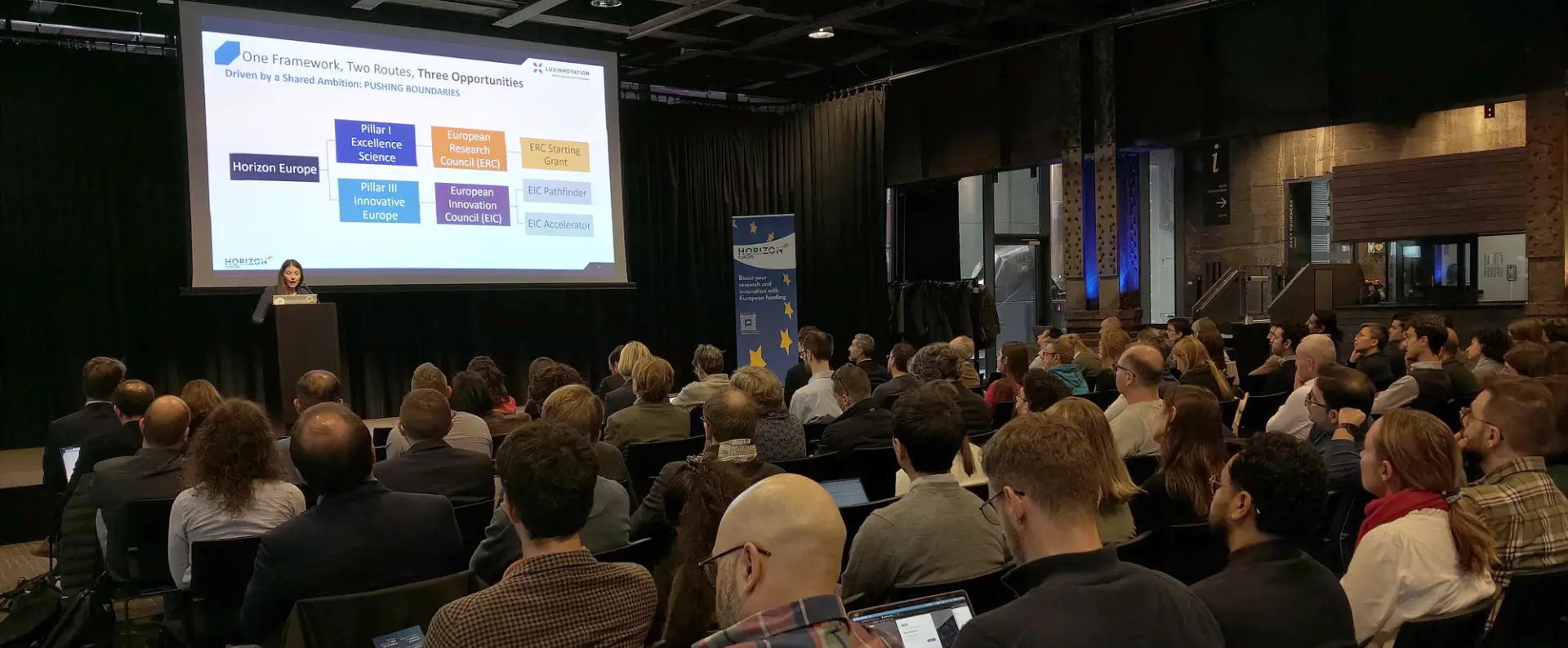
On 18 November 2026, Luxinnovation brought the Luxembourg ecosystem together for Horizon Europe Day. Keynotes and workshops set out how Horizon Europe (HE) works in practice, which opportunities are open and what is coming next. Researchers, companies and public bodies also heard from Luxembourg projects that have already secured funding.
Luxembourg's Horizon Europe track record
Luxembourg organisations received €318.6 million in HE grants up to September 2026. Private companies received €146.4 million, about 46% of the total, and SMEs received €50.1 million, about 16%.
Being successful in such a competitive environment gives you stronger credibility in business negotiations and with scientific partners. Stefano Pozzi, Luxinnovation
Luxembourg applicants submitted 537 successful proposals, a success rate of about 15%. The programme-wide rate is 14%. However, competition is growing. Calls for 2025 received 52% more proposals than in 2024, and the success rate for calls closed in 2025 was 10%.
Stefano Pozzi, Director of Innovation and Funding at Luxinnovation, explained why participation matters beyond the grant itself: "Being successful in such a competitive environment gives you stronger credibility in business negotiations and with scientific partners."
Francesca Borrelli, Head of European Funding at Luxinnovation, who presented the Horizon Europe updates for 2026-2027, encouraged applicants to start preparing now: "You can already look at the results your projects have produced, and decide where you want to invest your effort and resources."
Eight projects showcasing success and impact in Luxembourg
Eight projects were featured at Horizon Europe Day as concrete examples of the opportunities and impact associated with European research and innovation programmes.
Three beneficiaries shared their ERC and EIC funding journeys during “Inspire – First success stories”, offering lessons and practical advice to future applicants. Five collaborative projects took part in “Impact – Project impact talks”, presenting their achievements and the tangible benefits they are delivering in Luxembourg.
Kore Metals (EIC Accelerator): Pablo Calla, explained that Kore Metals is developing a low-carbon process to produce silicon, which the EU lists as a critical raw material. Molten salt electrolysis turns sand into a porous silicon sponge, which is refined into high-purity silicon metal. The project moves from a demonstrator to a commercial plant by 2028.
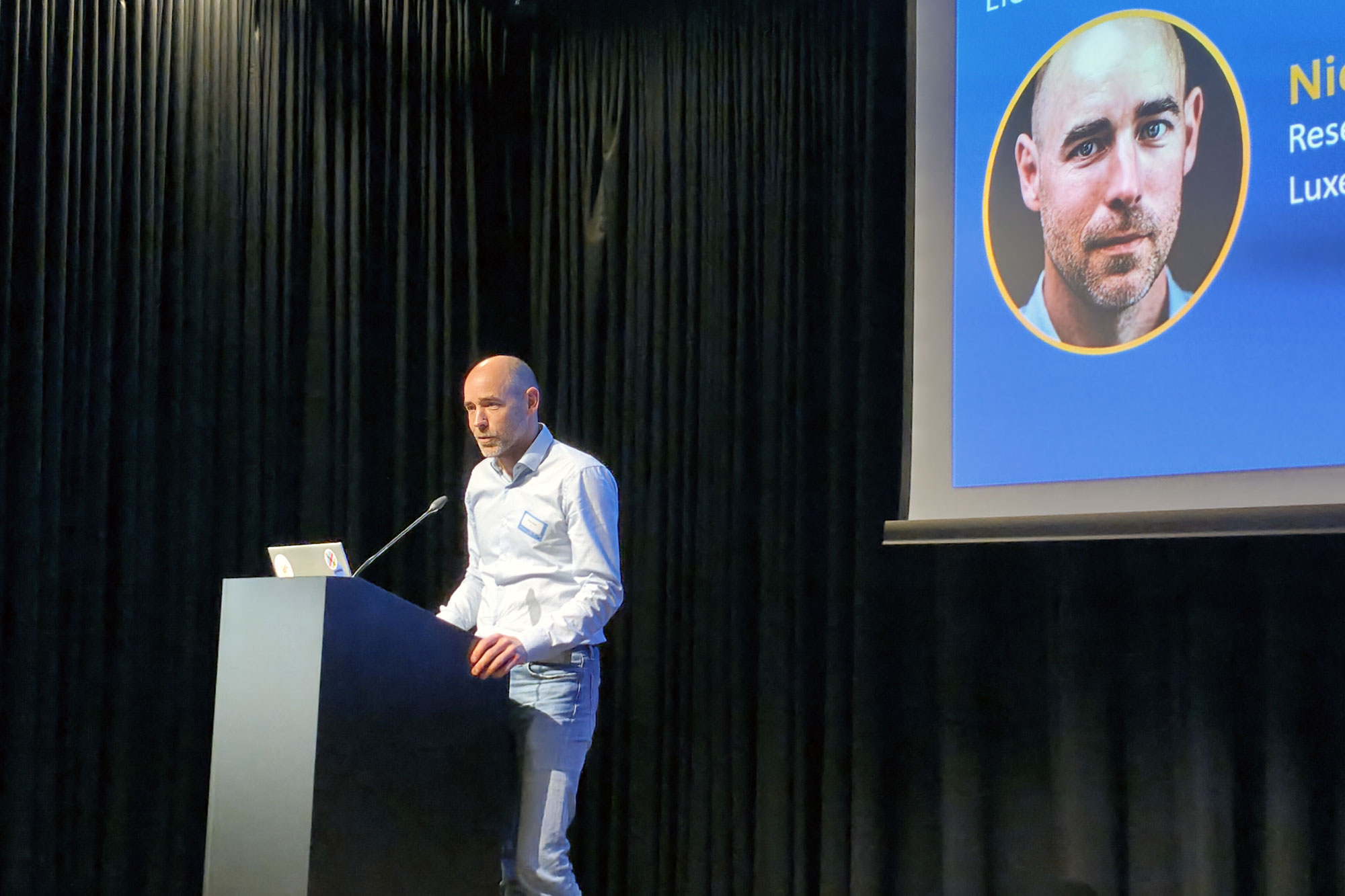 SUN2CN (EIC Pathfinder Challenges 2024): Led by Nicolas Boscher at the Luxembourg Institute of Science and Technology (LIST), the project is under the "Solar-to-X" challenge. The aim is a single device, driven only by sunlight, that integrates all conversion steps to produce synthetic fuels and chemicals. The proposal combines nitrate and CO2 to form C-N compounds. The project is still at research stage.
IMMUNOGENOMICS (ERC Starting Grant): Ángel Álvarez-Prado of the Luxembourg Institute of Health (LIH) investigates personalised immunotherapies for brain metastatic cancer. The hypothesis is that age and genetics shape anti-tumour immune responses, and the team aims to map both to immune states so that treatment can be tailored. The slides note that 20% to 40% of cancer patients develop brain metastases, and that standard care has a median survival of 6 to 9 months.
URSOILL (Soil Mission): Led by Anna Espinoza at LIST, the project runs living labs in five countries, including the Minett region in Luxembourg, to test urban soil restoration. Its impact includes tested solutions for other sites and an open call for two new local providers, each with up to €100,000.
ACUMEN (Cluster 5): Francesco Viti of the University of Luxembourg leads a project on AI-aided management of multimodal transport, with 17 partners across 9 countries and 4 pilots, including Contern and Esch. Expected results include AI-based forecasting models and digital twins that help authorities manage traffic and congestion.
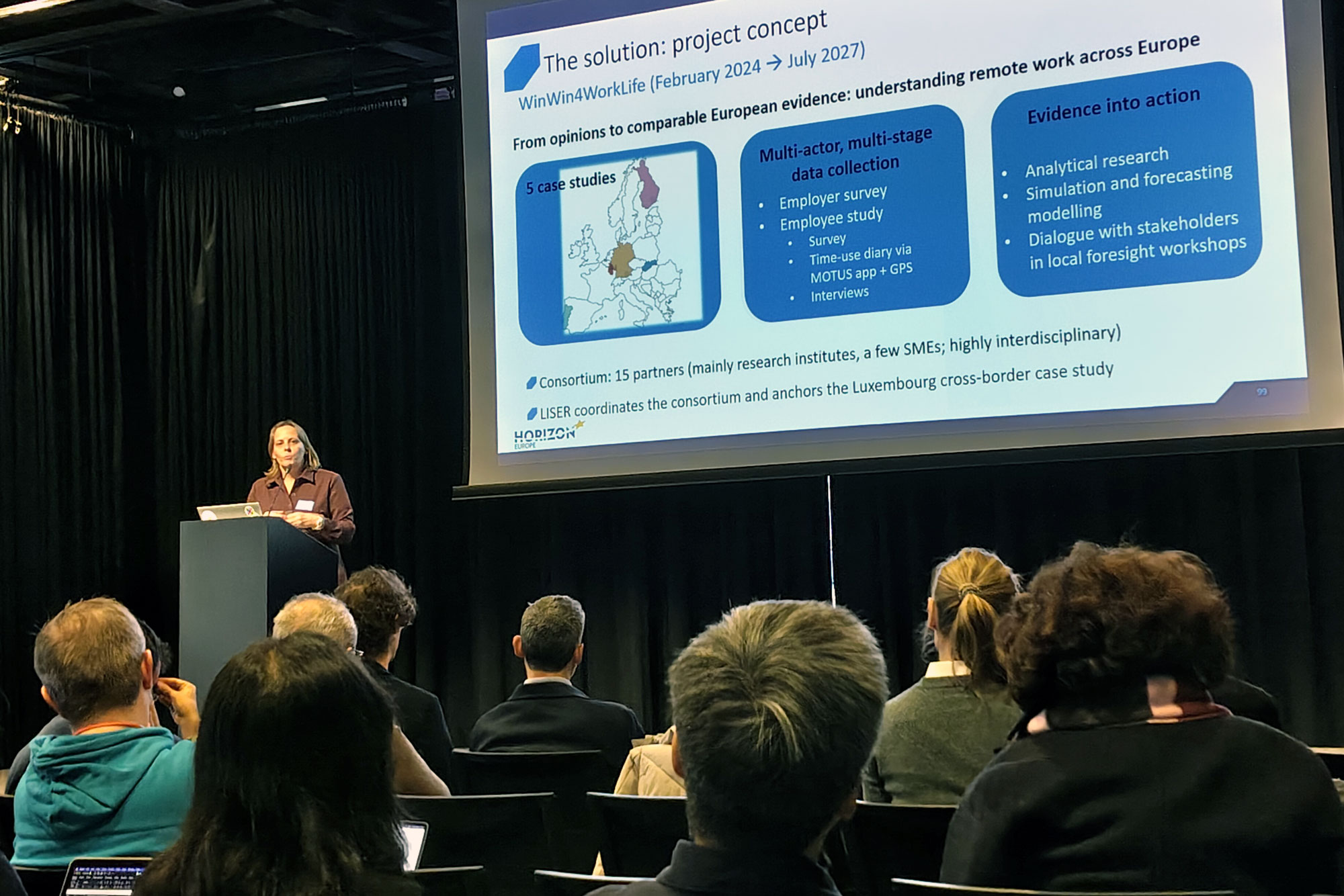 WinWin4WorkLife (Cluster 2): Veronique Van Acket from the Luxembourg Institute of Socio-Economic Research (LISER) coordinates this project on remote work across Europe, with 15 partners and five case studies. Early findings show that hybrid workers save more than one hour of travel on remote days, a time that goes to unpaid work, leisure and personal care.
REGEN (Cluster 5): Sylvain Kubicki from the LIST coordinates this project on the regeneration of neighbourhoods, with 23 partners. The Luxembourg demonstration site is Beckerich, a municipality of about 2,865 inhabitants, where the municipality may integrate the results into local policy and tenders.
CANDLE (Cancer Mission): Coordinated in Luxembourg by LIH, the project supports the set-up of a National Cancer Data Node, with 40 partners in 20 countries. Michaël Schnell and Max Xhauflair explained it aims to give researchers one national counterpart for cancer data access, building on existing registries and platforms.
Lessons from funded Luxembourg projects
Across the different fields represented, successful beneficiaries highlighted several common recommendations for future applicants.
- Choose your call with care and build on a mature idea. Read the call text closely, define the concept first, then the implementation plan.
- Start early and select partners carefully. Involve end users and local partners from the start, because consortium building and impact both take longer than expected.
- Prepare for time pressure. Coordinate with a strong support team, use external help and feedback before the deadline, and delegate where you can.
- Plan exploitation and the business plan early, not in the final year of the project.
- Make the reviewer's task easy. Show that your team is the right one for the work.
- Stay credible. Avoid overpromising, because technologies and markets change quickly.
- Treat the grant agreement as the reference document. Report changes early and justify them.
How Luxinnovation supports your proposal
Luxinnovation's National Contact Point (NCP) team offers free, confidential and independent support. It helps you understand the new calls, find the right topic, check eligibility and review your proposal. The team also covers the Digital Europe Programme and the Innovation Fund, so one contact can point you to the right instrument for your project.
If you are considering a Horizon Europe proposal, contact our team early.