Sustainable composites: A milestone for SCMM in Luxembourg
Demonstrators, patents and partnerships: the SCMM Industry Day 2026 confirmed the maturity of the sustainable composites ecosystem in Luxembourg.
 Jean-Michel Gaudron
16/11/2026
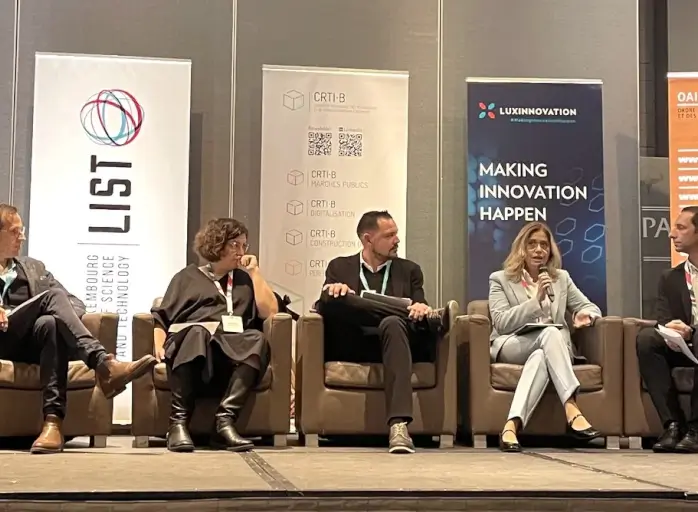
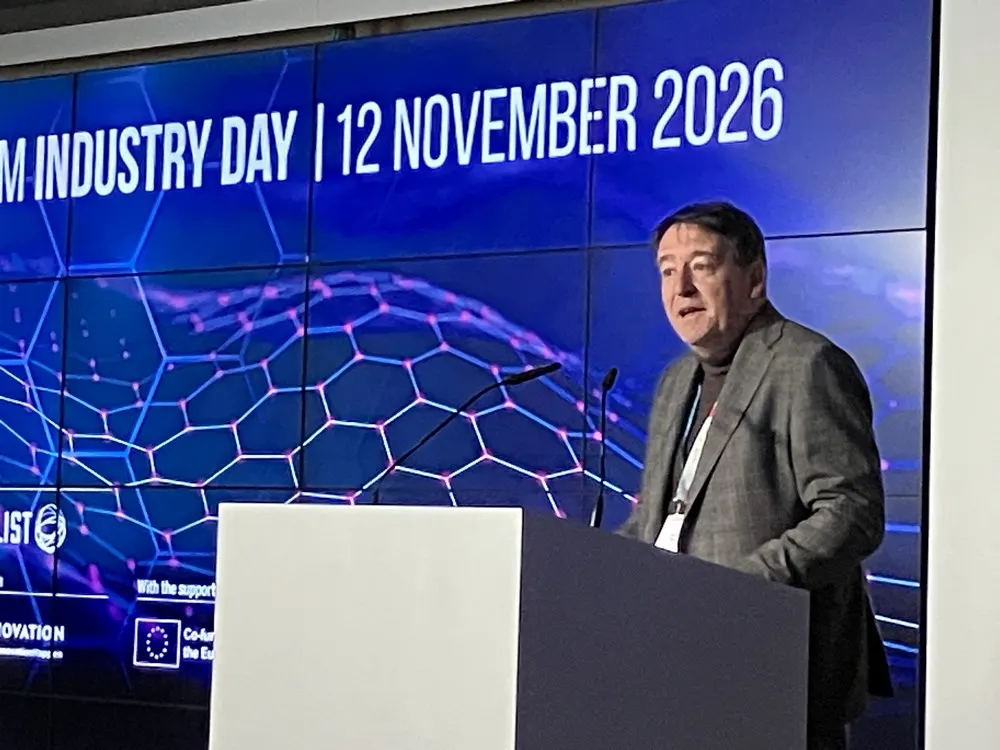
The SCMM (Sustainable Composite Materials and Manufacturing) Innovation Centre is LIST's innovation centre dedicated to the industrial transfer of sustainable composite materials in Luxembourg. For its third edition, the SCMM Industry Day, organised in collaboration with Luxinnovation, brought together more than 230 participants (including some 50 industrial companies) from 14 countries at the European Convention Center Luxembourg, confirming the dynamism of this fast-growing ecosystem.
Partnerships between researchers, suppliers and manufacturers are essential. Dr Olivier Guillon, CEO of LIST
It was an opportunity, among other things, to celebrate the end of the first phase of deployment of this innovation centre, created in 2022 "to respond to one of the most difficult challenges: bridging the crucial gap between research results and their large-scale industrial adoption," said Dr Olivier Guillon, CEO of LIST. "But how do you implement practical industrial applications without compromising performance? And how do you industrialise on a large scale while preserving the high-performance value of materials? That's why partnerships between researchers, suppliers and manufacturers are essential."
Demonstrators that prove with concrete evidence
The SCMM Innovation Centre has no shortage of partnerships, nor of concrete achievements, illustrated by several demonstrators presented on this occasion:
- Development of bamboo fibres for automotive component materials, allowing an improvement of about 50% in their strength (with Toyota, Gradel LW, Arkema and Swancor);
- Reuse of carbon fibres to create a new generation of recyclable hydrogen tanks for which performance, manufacturing and end-of-life recovery are jointly designed (with Gradel LW);
- Use of vitrimer resins in lightweight sandwich structures for aircraft cabin interiors (with Euro-Composites, Airbus and KordSA);
- A different design for aircraft door hinges using a hybrid structure combining aluminium interfaces with robotically wound carbon fibre, allowing a saving of nearly 2 kg (with Latécoère and Gradel LW);
- Development of composite satellite structures combining an aluminium honeycomb core with unidirectional carbon fibre composite skins, in order to facilitate their disassembly, recycling and repair while maintaining the properties of lightness, rigidity and durability (with ThalesAlemnia and Adamant);
- Reuse of carbon fibre profiles not suitable for wind turbines to create cantilevered seat frames for buses, allowing substantial weight savings (with Iveco Group and Aksa Carbon).
"Behind all these demonstrators, there is a significant amount of human effort," said Levent Kirkayak, Head of Structural Composites Research Unit at LIST. More than 50 researchers and engineers have invested over 93,000 hours of work in contributing to the success of the SCMM Innovation Centre. More than 250 technical meetings have enabled the integration of 29 materials technologies into the various demonstrators developed. All this work has resulted in the filing of seven patents, "and others are in progress."
From the competence center to the complete ecosystem
Reaching such a level of excellence was not straightforward. Mario Grotz, CEO of Luxinnovation, recalls the first discussions with industrial companies that were convinced of the need to develop a partnership between the private and public sectors to support the development of the composite materials industry around the creation of a competence and innovation centre.
"It took a long time before a well-structured proposal was on the table. But look at today: we did not just build a competence center, we built a complete ecosystem around sustainable composites. The SCMM connects academia, industry and public organisations and gives companies access to experts, resources and facilities. It covers the entire value chain of sustainable composite materials and manufacturing."
We did not just build a competence center, we built a complete ecosystem around sustainable composites. Mario Grotz, CEO of Luxinnovation
Luxinnovation has been at LIST's side since the very first steps of the SCMM Innovation Centre, whose raison d'être is perfectly in line with the economic diversification strategy supported by the government and which is reflected in support for manufacturing activities and the strengthening of the country's industrial base. "For companies in these sectors, the SCMM is a good reason to consider producing composite and lightweight materials in Luxembourg," said Mario Grotz, who highlighted three strengths of this partnership.
Firstly, the possibility of carrying out tests early in the process and under real conditions. This reduces technological risk. Secondly, the possibility of working across sectors and, finally, better visibility into the future. "Companies need programmes that last. That's why the new phase of the SCMM Industry Day that is now being implemented is important. We are convinced that it will bring more industrial transfers, collaborations and impact for companies."
Collaboration drives innovation in composite materials
Today, the SCMM Innovation Centre excels in the development and industrial adoption of materials with a very low carbon footprint in the automotive, rail, space and aeronautics sectors, as well as in the urban air mobility of the future. By bringing together researchers and industrial partners, it has created the conditions for innovations to move out of research laboratories and into concrete applications.
"This approach is more relevant than ever at a time when Europe is going through major transitions," said Stéphanie Obertin, Minister of Research and Higher Education. "The future of mobility, aerospace, rail transport, energy systems and space technologies will depend on our ability to develop lighter, more efficient and more sustainable materials. Composite materials will play a key role in solving these challenges."
This spirit of partnership is one of Luxembourg's greatest strengths and a key condition for the success of innovation. Stéphanie Obertin, Minister of Research and Higher Education
The Minister emphasised the collaborative dimension of this initiative, which brings together research organisations, industrial partners and end-users from the entire value chain. "This spirit of partnership is one of Luxembourg's greatest strengths and a key condition for the success of innovation."
Industry niches and challenges for the future
Beyond this strength at national level, Luxembourg clearly has a role to play on a larger scale, in particular by focusing on niche skills. Confronted with major players such as the United States and China, Stefano Pozzo Mucceli, Director of Innovation and Funding Services at Luxinnovation, proposes another approach: "Create something, go to niches, find what is not done elsewhere and become a leader in this field."
Alex Schumann, President of FEDIL, the Federation of Luxembourg Industrialists, nevertheless emphasises the practical obstacles faced by manufacturers, starting with authorisations. "As soon as you start manufacturing, you often need authorisations." Finding available space is another challenge: "I very regularly receive an e-mail from someone looking for such spaces."
SCMM essential for the ecosystem
The time factor was another theme around which discussions revolved, particularly in terms of research funding. In an extremely competitive environment, Isabelle Mossong, Secretary General of the FNR, explained that doctoral students need a stable schedule. A thesis lasts three to four years, which makes it difficult to plan short and rapidly evolving projects. "The thesis takes time. When you submit a project in these fields, it is difficult to anticipate the future in three or four years." In this context, an individual project hosted by a company can offer a more realistic path, with a few months of exposure to the industrial world.
Structures like the SCMM are essential to our ecosystem, and its know-how is a guarantee of confidence for the future. Christian Tock, Deputy Director General at the Ministry of the Economy
Time was also present in the closing remarks of Christian Tock, Deputy Director General at the Ministry of the Economy. "Technologies are evolving at an ever faster pace, but the feasibility and properties of materials must always be demonstrated by demonstrators. This is why structures like the SCMM are essential to our ecosystem, and its know-how is a guarantee of confidence for the future."