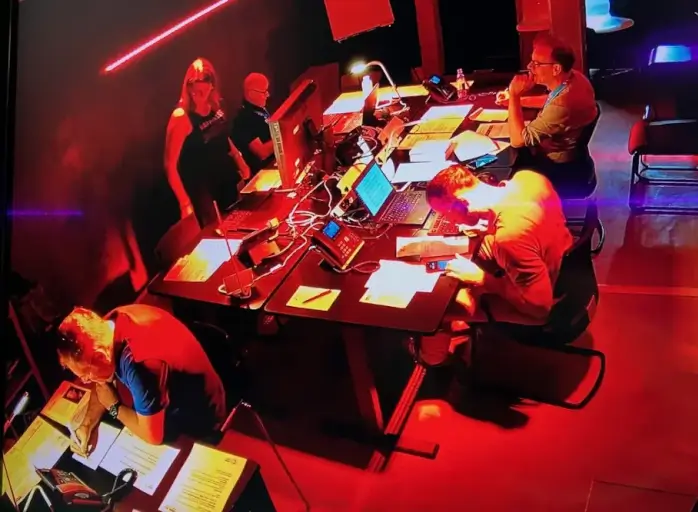
SCMM Industry Day 2026: Composite materials put on a show
This event on 12 November will showcase the achievements of the Sustainable Composite Materials & Manufacturing Innovation Centre, managed by LIST.
 Jean-Michel Gaudron
17/09/2026
Launched on 1 January 2023, the Sustainable Composite Materials & Manufacturing (SCMM) Innovation Centre was created from a straightforward yet pivotal observation. The Luxembourg Institute of Science and Technology (LIST) possessed recognised expertise in composite materials, but the technologies developed struggled to cross what specialists refer to as the "valley of death" in innovation: the critical gap between research outcomes and large-scale industrial adoption.
"Between the results of university research and what a company is willing to invest, there are still risks associated with technology transfer," explains Thierry Girot, Technology & Innovation Manager and SCMM Manager at LIST. "Technologies are not always mature enough for immediate industrial use, and companies may lack the technical and/or financial capacity to develop them independently."
Composite materials for sustainable mobility
The centre was established with a clear goal: to advance technologies to a stage where their added value is evident, thereby convincing the industry to invest in their deployment. To achieve this, the SCMM encompasses the entire value chain, from the synthesis of new bio-based and recyclable polymers to the production of prototypes, demonstrators, or parts that can be integrated into actual vehicles.
The Centre primarily targets all types of mobility: land (cars, buses, trucks, rail), air (planes, drones), and space, with lightweight and durable composite materials as a common theme.
Such a Centre contributes to our competitiveness and resilience and supporting the national industrial fabric. Christian Tock, Ministry of the Economy
The centre receives support from the Ministry of Research and Higher Education and the Ministry of the Economy, as well as the European Regional Development Fund (FEDER) and Luxinnovation.
"The SCMM is part of a long tradition of innovation in materials," says Christian Tock, Deputy Directorate-General at the Ministry of the Economy's Directorate-General for Industry, New Technologies and Research. "This is a field that remains crucial for the country and its industry and is one of the key areas identified in Luxembourg's Defence Industry Strategy, for instance. Such a Centre is vital to transform innovation from public research into business applications, thus contributing to our competitiveness and resilience and supporting the national industrial fabric."
50 leading researchers and industrial partners
"Lightweighting is a crucial factor in mobility," says Thierry Girot. "The lighter a vehicle, the less it consumes. But we are going further: for example, we are working on the recyclability of materials to reduce the vehicle's carbon footprint throughout its entire life cycle, from production to end-of-life, and even beyond."
Among the industrial partners collaborating with the centre are major players such as Airbus, Toyota, Iveco, and Thales Alenia Space, as well as national firms like Euro-Composite and Gradel Light Weight. In four years, the SCMM has engaged around fifty researchers and engineers, within a LIST with 800 employees.
Four major contributions
From Luxinnovation, the national innovation agency, the creation and development of the SCMM have been closely monitored. "This initiative has made four major contributions to the ecosystem," says Anthony Auert, Business Relationship Management at Luxinnovation:
- Technology acceleration — "The centre has advanced composite technologies to the demonstrator stage, which is essential to persuade manufacturers to invest."
- Structuring a national ecosystem — "The SCMM has united Luxembourg and international industrial players, which adds real value to innovation."
- Strengthening industrial sovereignty — "Light, recyclable, and high-performance composite materials are strategic for mobility, defence, and space. Luxembourg is now positioning itself as a territory capable of contributing to these value chains."
- International visibility — "The involvement of players such as Airbus, Toyota, Iveco, and Thales Alenia Space demonstrates that Luxembourg is a significant player in the field of composites."
This is precisely the kind of dynamic we aim to create: reducing risk, accelerating innovation, and connecting companies to the right partners. Anthony Auert, Luxinnovation
The SCMM serves as a tangible resource for Luxembourg companies, allowing them to test materials and processes in semi-industrial infrastructures. This enables them to access advanced skills in composite materials, bio-based polymers, and recyclability, to validate concepts before investing in production lines, and to establish credible industrial partnerships, including with international players. "For Luxinnovation, this is exactly the type of dynamic we strive to create: reducing risk, accelerating innovation, and connecting companies to the right partners," summarises Auert.
A successful first phase...
To support its activities, the SCMM has been organising an annual meeting since its inception, which has become a key event in the Greater Region and beyond. It brings together researchers, industrialists, and political decision-makers. "We need these three pillars to develop next-generation composite materials, with a particular emphasis on the industrial aspect, because it is there, ultimately, that the technologies become reality," says Mr Girot.
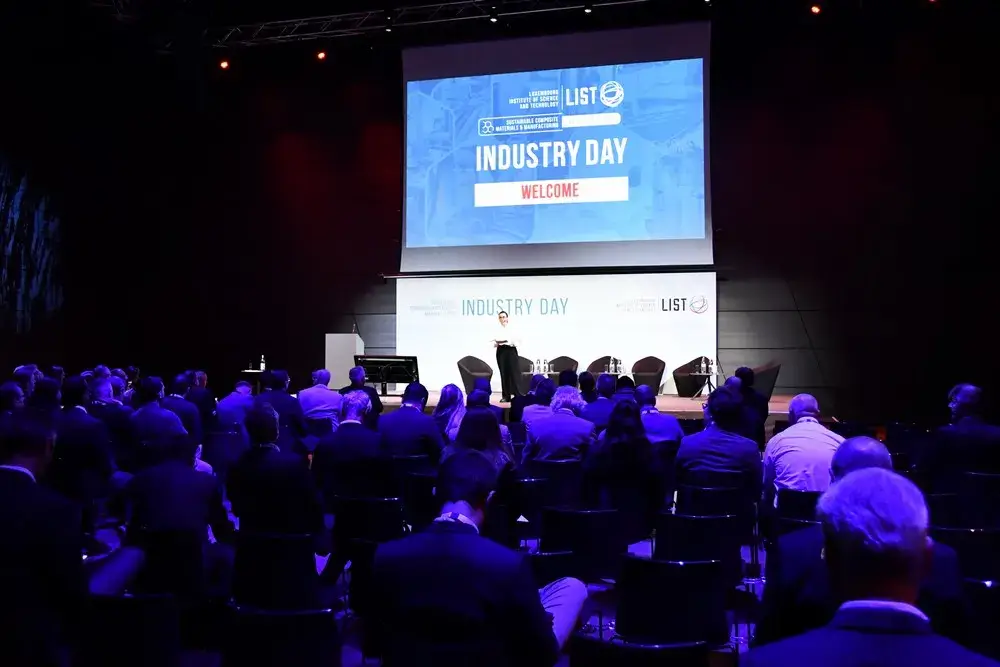
In 2025, the SCMM Industry Day welcomed around a hundred companies from 13 countries. The 2026 edition, which will take place on 12 November at the European Convention Center Luxembourg, will continue this tradition, with a significant contextual element: it marks the end of the first phase of setting up the capabilities of the Sustainable Composite Materials & Manufacturing Innovation Centre. With the satisfaction of a job well done, since all the key performance indicators set at the outset have been achieved: semi-industrial research infrastructures have been developed, partnerships with industry (equipment manufacturers, suppliers, aeronautics, and space players) have been established and consolidated.
… and a promising second phase
"We have demonstrated that we can form solid industrial partnerships and develop technologies that are genuinely useful for the industry," says Thierry Girot. "Many of our partners are ready to support us in the second phase."
This second phase focuses on the technological transfer of the most promising innovations to industrial applications, with an emphasis on the return on investment on a national scale. It aims to further structure a Luxembourg ecosystem of around fifteen players in composites while opening up mobility technologies to other sectors: wind power, construction, and industrial manufacturing.
The SCMM places Luxembourg on the map of innovative countries in the field of materials and strengthens links with international ecosystems. Christian Tock, Ministry of the Economy
"From our experience in the SCMM, the main lesson we have learned is the value that such an applied innovation centre can represent," summarises Anthony Auert. "Such a centre is essential to transform research into industrial applications. Testing early and under realistic conditions is crucial to reducing technological risks."
He highlighted the importance of cross-sectoral collaboration, as the most promising projects have involved mobility, defence, space, materials, and manufacturing. "Additionally, companies seek long-term programmes. Phase 2 of the SCMM meets this expectation."
SCMM Industry Day 2026: a rich programme
The 2026 edition of the SCMM Industry Day will provide the Centre with the opportunity to present all the technologies developed and the demonstrators, as well as to highlight the industrial partners and demonstrate how the SCMM can promote collaboration with industrial players.
In addition to the presence of international experts and industrialists, a "Tech village" will showcase innovations around composite materials in a giant showroom, including recyclable hydrogen tanks, recyclable aircraft cabin materials, and a new generation of satellite panels.
"Through the collaborations developed and thanks to events like this, the SCMM places Luxembourg on the map of innovative countries in the field of materials and strengthens links with international ecosystems. This is of primary importance for Luxembourg's industry and economy," says Christian Tock.
Among the high-level speakers expected at this event:
- Stéphanie Obertin, the Minister of Research and Higher Education, who will deliver the opening speech
- Marc Fette, CEO of the Composite Technology Center (CTC), an entity that develops future Airbus technologies
- Roberto Frassine, President of EUCIA, the European voice of the composites industry.
Our ambition is to bring together all the players in the value chain active in Europe so that, together, we can prepare the projects and technologies of tomorrow. Thierry Girot, LIST
Networking and B2B matchmaking sessions will facilitate structured meetings to foster collaboration across the entire value chain. Sessions can also be organised online for the following two weeks.
"This event must obviously focus on technology, but it must also support exchanges, create new ideas, and bridge the gap between research and industry," sums up Thierry Girot. "Our ambition is to bring together all the players in the value chain active in Europe so that, together, we can prepare the projects and technologies of tomorrow."
In addition, on 13 November 2026, participants will have the opportunity to visit LIST's research facilities at the Maison des Matériaux and Hautcharage to discover in detail the centre's technical capabilities, semi-industrial equipment, and laboratories.
"The SCMM has shown that Luxembourg can develop, test, and transfer next-generation composite technologies," summarises Anthony Auert. For Luxinnovation, this programme is an accelerator, a connector, and a revelation of industrial potential. We are confident that phase 2 will allow us to go even further, facilitating more industrial transfers, collaborations, and impact for companies and the country."