
Agentic AI: when artificial intelligence takes action
Automating tedious tasks and freeing up time for those with greater added value—this is the promise of AI agents that can be seamlessly deployed within companies, with essential support from humans.
 Jean-Michel Gaudron
08/06/2026
Artificial intelligence (AI) is no longer confined to analysis or content generation. We are now entering a new era: agentic AI, where intelligent systems can autonomously plan and execute tasks under human supervision.
For businesses, this shift towards intelligent systems, which function as truly proactive employees, offers a significant opportunity for transformation.
From assistance to action: understanding agentic AI
Unlike generative AI, which produces content on demand, agentic AI takes things a step further—it acts. These systems, referred to as "agents," can break down complex goals into subtasks, interact with software tools, and adapt to achieve objectives with minimal human intervention, though human input remains essential.
A recent publication by KPMG estimates that agentic AI could generate up to $3,000 billion in global productivity gains and predicts an 18% rise in productivity and satisfaction for businesses adopting these technologies.
Imagine a digital employee that not only answers your questions but also takes the initiative to solve problems. This is the promise of agentic AI: transforming AI from a passive assistant into a proactive partner capable of orchestrating workflows, analysing data, and collaborating with human teams to optimise operational performance.
"More and more agents are being deployed in companies," explains Christian Michel, founder and CEO of TeamIA, a company specialising in sovereign and tailor-made artificial intelligence. "Their applications range from relatively simple tasks, such as automated translations or drafting social media posts, to processing vast amounts of technological data—for instance, identifying 80,000 different rubber formulations to create new ones, or predicting energy production levels two months in advance based on fluctuating demand."
Practical applications of AI agents in companies
AI agents can be deployed in various scenarios:
- Customer support: analysing tickets, consulting documentation, diagnosing and resolving issues, preparing detailed reports for technicians, or responding directly to queries.
- Sales operations: automatically enriching prospect files in CRM systems, qualifying leads, or preparing for appointments.
- Data and management: querying internal data in natural language, conducting continuous market and competitive intelligence, or detecting anomalies in financial or operational data.
- Compliance and onboarding: automating KYC (Know Your Customer) and KYB (Know Your Business) processes, verifying documents, and ensuring regulatory compliance.
"These AI agents are gradually becoming part of everyday business operations as their accessibility continues to expand," notes Mr Michel. "However, it is crucial to prioritise objectives when implementing such projects. Companies often have multiple AI initiatives running concurrently, so starting small can help teams gradually adapt and see measurable results. Change management and team support should not be overlooked—showing employees how AI agents can automate repetitive tasks allows them to focus on higher-value activities."
Fit 4 AI: accelerating AI adoption in Luxembourg
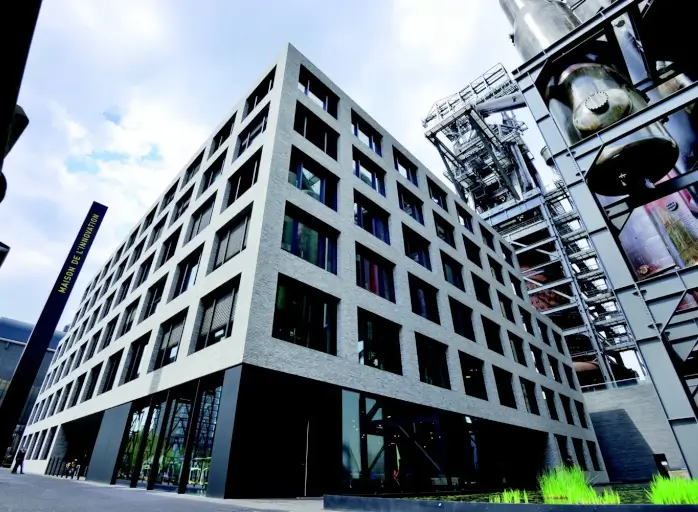
Based at the innovation hub in Dudelange, TeamIA is one of the consultants referenced by Luxinnovation as part of the Fit 4 AI programme. This initiative supports Luxembourg-based companies of all sizes in identifying how artificial intelligence can generate value from their existing data and processes.
The Fit 4 AI programme enables businesses to collaborate with experienced consultants, referenced by Luxinnovation, to:
- Define key challenges and priority objectives.
- Assess the feasibility of identified use cases, particularly by evaluating the quality of available data.
- Develop a detailed roadmap, including a costed action plan, estimated return on investment, and recommendations for technology choices.
This programme is open to companies holding a valid business permit and not classified as financially distressed. It provides a clear and structured pathway for organisations to begin their AI transformation.
A practical example: automating contact management
After trade shows or networking events, handling collected business cards and associated contacts can often be tedious. With the right application of artificial intelligence, this process becomes much simpler.
By scanning a business card, a prospect’s basic information (e.g., name, address, phone number, email) can be automatically imported into a CRM system. "The human element then adds contextual details, such as the nature of the meeting, initial exchanges, and the timing of future interactions," explains Michel.
The AI agent can then generate a personalised email in the desired language and on the specified date, ensuring quality follow-up. "The human user defines the rules that the agent uses to draft the email—for example, whether to use informal or formal language, reference specific topics, or suggest an appointment. This contextualisation adds significant value to the interaction."
Before sending, the user simply validates the content. "In just 30 minutes, I can create seven personalised emails ready to be sent."
Agentic AI: an opportunity to seize
Agentic AI is still in its infancy. Yet, with Luxembourg’s robust innovation ecosystem and support programmes such as Fit 4 AI, backed by expert consultants, companies have the tools to innovate, boost productivity, and prepare for the future economy.
Do you have an AI project in mind to enhance your business processes? Contact Luxinnovation.