Green transition: What financing tools?
In Luxembourg, numerous support schemes are available for companies aiming to reduce their carbon footprint, manage energy costs and enhance competitiveness.
 Jean-Michel Gaudron
07/07/2026
Reducing CO₂ emissions also translates to lowering energy bills, anticipating regulatory demands, and securing business models against the volatility of global energy markets. The ecological transition should no longer be seen as a constraint, but rather as a sustainable competitive advantage.
Companies operate within a swiftly evolving regulatory framework. The Integrated National Energy and Climate Plan (NECP) sets ambitious climate targets for 2030. At the European level, regulations are becoming stricter: since 2026, decarbonisation measures reliant on fossil fuels are no longer subsidised in Luxembourg. Additionally, new sustainability reporting obligations require companies to organise and document their environmental progress.
What is the energy transition?
The ecological and energy transition is defined as "any change that reduces the environmental impact in the production or consumption of energy or the use of resources". The circular economy, particularly through extending the lifespan of products, is explicitly included.
Taking action and implementing such a transition grants access to targeted measures: installation of photovoltaic panels, acquisition of zero-emission vehicles, deployment of charging stations, or support via the Fit 4 Sustainability programme — all measures that simultaneously reduce operating costs and reliance on global energy markets.
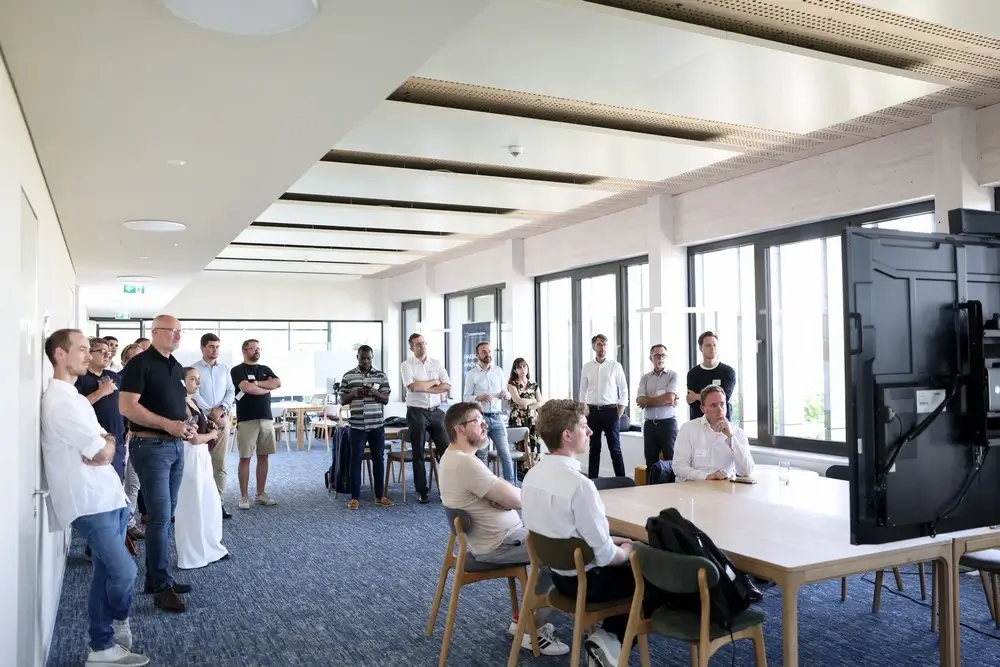
To better navigate these options, the Klimapakt fir Betriber initiative, jointly led by Klima-Agence and Luxinnovation, aids SMEs in reducing their carbon footprint, lowering energy costs, and developing low-carbon products. As highlighted during a special day at the end of June, an online catalogue of standardised measures and innovative solutions is available, showcasing practical achievements in concrete terms.
Aid from the environmental law
The law of 8 December 2025 outlines various types of aid depending on the nature of the environmental investments considered. These range from environmental protection, including decarbonisation, to the procurement of zero-emission road vehicles, energy from renewable sources, renewable hydrogen and high-efficiency cogeneration, to the efficient use of resources and support for the transition to a circular economy, to the conducting of environmental studies.
This aid is subject to minimum amounts: €50,000 for SMEs and €100,000 for large companies.
"To access this aid, the company must estimate its costs, describe the planned investment, and explain the favourable environmental impact of the investment. It can then apply for the required authorisations and submit its application for aid via MyGuichet.lu", summarised Clément Streicher, Business Relationship Advisor – Skilled Crafts at Luxinnovation, during a workshop dedicated to carbon assessment as part of the recent Klimapakt fir Betriber day. "At each of these stages, Luxinnovation is there to support companies in their efforts."
Tax enhancement for investment
The tax credit for investment in digital transformation and ecological transition aims to encourage and support Luxembourg companies while bolstering their resilience and competitiveness.
The overall subsidy rate is 18%, applicable to both investments (CAPEX) and operating expenses (OPEX).
In terms of ecological transition, six specific objectives are eligible:
- Improving the energy efficiency of a production process (replacing an older generation industrial furnace with a high-efficiency model)
- Significantly decarbonising a production process (replacing a natural gas boiler with an electric boiler)
- Self-consumption or storage of energy produced from renewable non-fossil sources (installation of photovoltaic panels)
- Reducing air pollution from production sites (installing a flue gas filtration system beyond current standards)
- Improving the material efficiency of a production process (installing a wastewater treatment system)
- Promoting the extension of product use through reuse (investing in systematic repair capacities or a sharing model)
For digital transformation, the company must meet at least one of the following objectives:
- Redefining a production process from start to finish
- Introducing an innovative business model, including circular economy
- Redefining service delivery as a whole
- Modernising the organisation of the company
- Strengthening IT security
Eligible costs include investments in tangible depreciable assets (excluding buildings, live agricultural livestock, mineral and fossil deposits) and in software or patents, as well as operating expenses: use of patents or software, advisory services, diagnosis and technical support provided by external service providers, staff directly assigned to the transition, and staff training.
Investment aid and other programmes
Fit 4 Sustainability
The Fit 4 Sustainability programme offers a detailed assessment of the company's current state and potential for improvement in four key areas: carbon footprint, energy efficiency, water use, and life cycle assessment and circularity.
This diagnosis, conducted by a consultant approved by Luxinnovation, leads to an action plan and a tailor-made, costed, and operational roadmap.
The programme is co-financed up to a maximum of 60% for large companies, 70% for medium-sized companies, and 80% for small companies.
SME Packages - Sustainability
For smaller projects, the House of Sustainability's SME Packages - Sustainability cover investments in energy efficiency, decarbonisation, water consumption, and waste management.
The scheme provides a 70% subsidy for projects between €3,000 and €25,000, with personalised support throughout the process.
Other complementary measures
Additional mechanisms complete this overview: Luxinnovation's Fit 4 programmes (as a whole), SME aid, and the Ministry of the Economy's research, development, and innovation (RDI) aid.
These devices can be combined depending on the nature and scope of the project.
Luxinnovation's support
Luxinnovation supports companies at every stage: access to external expertise via the Fit 4 Sustainability programme, understanding applicable regulations and exceptions, verifying the eligibility of the project leader and their project, providing methodological support, and assisting in completing aid application files.
The array of schemes available presents an opportunity for companies, but navigating between eligibility criteria, minimum amounts, certification procedures, and filing schedules requires specific expertise.
Luxinnovation supports companies free of charge in identifying the aid suited to their project, verifying their eligibility, and compiling their application.