Key changes for Horizon Europe funding mechanisms
Lump-sum funding, shorter proposals and easier reporting: discover the key Horizon Europe changes for 2026-2027, explained by European Commission representatives.
21/05/2026
The European Commission is introducing a series of significant changes to Horizon Europe funding mechanisms for the 2026-2027 period, aiming to simplify access, reduce administrative burden and improve the efficiency of grant implementation.
5 simplification measures for 2026-2027
In broad terms, these changes in 2026-2027 Horizon Europe Work Programmes can be summarised as follows:
- A more streamlined Work Programme, with a 33% reduction in length, and fewer, more focused topics.
- Shorter proposal templates, with standard page limits reduced by five pages.
- Faster selection in two‑stage calls, through a shorter first‑stage evaluation period (less than three months) and a reduced interval before second-stage submission (two months instead of three).
- Wider use of lump-sum funding, accounting for 50% of the 2026-2027 Work Programmes, with lump sums proposed as the default funding model in the successor to Horizon Europe (2028-2034). Lump-sum funding is a flat-rate grant model where beneficiaries report on deliverables achieved rather than actual costs incurred.
- Reduced reporting requirements, following changes to the impact section, which no longer requires applicants to describe general scientific, economic, and societal impacts or to quantify the scale and significance of projects’ expected contributions.
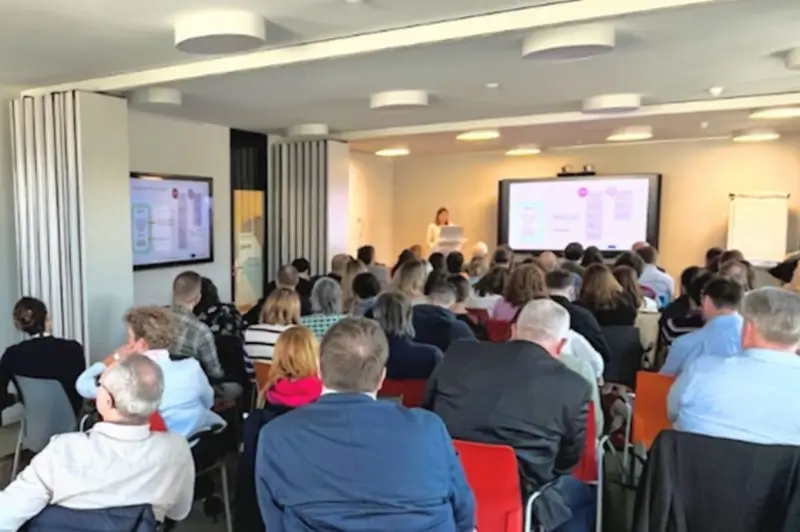
Peter Haertwich, Head of Unit at the Common Service for Business Processes at the European Commission’s Directorate-General for Research and Innovation (DG RTD), underlined the early evidence behind these measures, in a recent event dedicated to best practices and procedures in Horizon Europe grant implementation organised by Luxinnovation.
“The simplification measures are promising: in 2026, 78% of surveyed applicants agreed that lump-sum funding reduces administrative burden,” he said, highlighting the practical benefits for smaller players: “Fewer obligations, easier access: lump-sum funding opens HE to SMEs through simpler reporting; you report on the work you deliver, not on what you spend.”
Generative AI in Horizon Europe proposals and evaluations
Applicants may use generative AI tools when preparing Horizon Europe proposals, but they remain fully responsible for the accuracy, originality and compliance of all content submitted. The European Commission requires transparency regarding AI use and adherence to intellectual property rules.
“On the evaluation side, the Commission has also taken clear steps to frame the use of AI by expert evaluators, updating their Code of Conduct and continuously briefing them to ensure that any use remains strictly ancillary, properly documented, and fully respectful of confidentiality and data protection obligations”, Mr Haertwich explained.
Grant management: Well-established procedures to follow
Successful grant management under Horizon Europe depends on a thorough understanding of the Grant Agreement and well-established internal procedures. “The European Commission will never pay an amount exceeding the agreed grant. Careful resource planning and clear allocation of responsibilities are essential to ensuring smooth project implementation. Never sign the Grant Agreement without reading it carefully,” Sara Capruzzi, Legal Officer at DG RTD’s Common Legal Support Service, also explained.
Grant beneficiaries can rely on the EC Booster services, which provide them with both dissemination and go-to-market support. “While dissemination and exploitation of research results are legal obligations under Horizon Europe, they are, above all, powerful opportunities for innovators to unlock the full potential of their results,” explained officials Georgiana Huiban and Bilgeyis Najafova from DG RTD’s Common Implementation Centre.
Financial compliance: Avoiding common audit errors
The financial audits for actual cost grants are another major attention point for all beneficiaries. “I strongly encouraged them to ensure strict compliance with the Grant Agreement to avoid costly mistakes”, Angela Alvarez, Auditor at DG RTD’s Common Audit Service, explained. Drawing on audit experience, she points out that personnel costs remain the primary source of errors under Horizon Europe. “Even well-known rules continue to be misapplied, calling for extra attention from those new to Horizon Europe”, she warns.
This event allowed attendees to have a clearer grasp of Horizon Europe grant management and, for many, to download a new app on their phones: EU Funding & Me, introduced by Peter Haertwich as ‘the’ one-stop shop for EU grants management.
Luxinnovation's Horizon Europe support for Luxembourg
As Luxembourg’s national contact points (NCPs) for Horizon Europe, Luxinnovation provides guidance and support throughout the whole Horizon Europe journey, from proposal preparation to post-award management of funded projects.
Stay up to date with the latest developments, events and opportunities by subscribing to our newsletter and contacting the NCP team.

.jpg)