Deeptech financing: opportunities to be seized
More than ever, VC funds, public support and industrial partnerships will play a key role in the dynamics of deeptech, with each player bringing a unique perspective.
 Jean-Michel Gaudron
16/12/2025
Deeptechs, cutting-edge technologies that push the boundaries of invention and innovation, are at the heart of today's digital and scientific transformation. Their valorisation, and consequently financing, is crucial to accelerate the often disruptive deployment of these solutions. The context and financing landscape of these deeptech companies is evolving, offering new opportunities to entrepreneurs and investors.
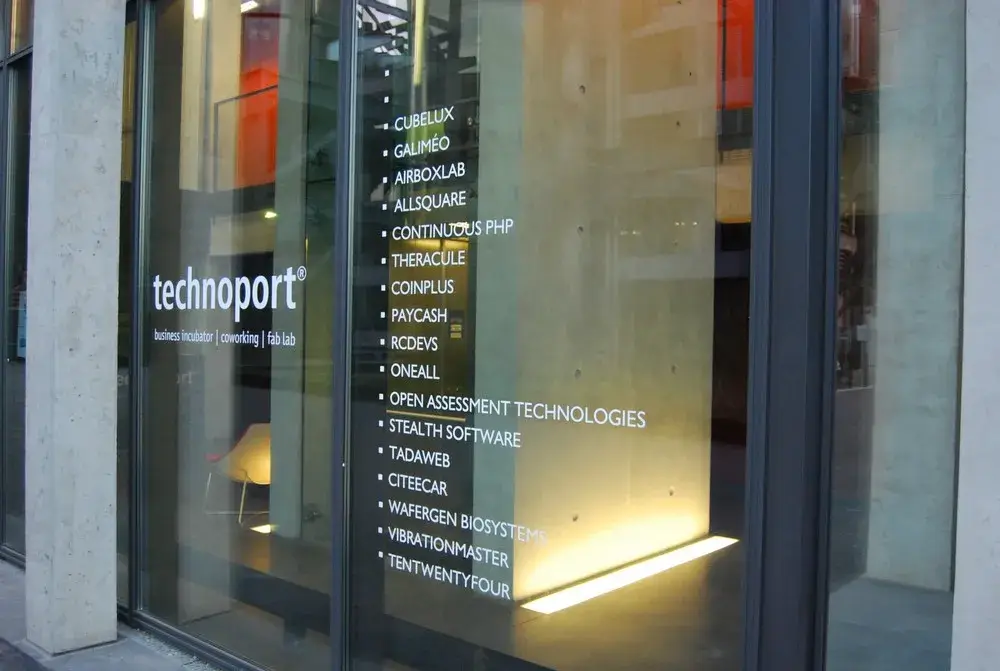
In itself, the concept of deeptechs is neither new nor revolutionary. "As we saw during our discussions at the Luxembourg Venture Days, it's more of a buzzword, a rebranding of what used to be engineering projects that were mostly the result of public research," says Diego De Biasio, CEO of Technoport and organiser of the Deeptech Venture Summit in Luxembourg, established in 2024, with the next edition scheduled for 17–18 September 2026.
By entering the early-stage phase, an investor can send an interesting signal to the market. Diego De Biasio, Technoport
Although it has been in its DNA since its creation in 1998, the historic Luxembourg incubator decided to focus on this theme more explicitly from 2019 onwards by working to develop and strengthen structural links with public research centres and universities. This is a long-term endeavour that is still ongoing, but which is taking on a whole new importance with the acceleration of technological developments and the profound geopolitical upheavals that have propelled defence-related issues to the forefront.
At a crossroads
"It's true that the military sector has always been a great supplier of innovative, even revolutionary technologies. But it is not the only one. The life sciences sector and the space sector are also affected. Today, there is AI and quantum technology that will bring the next big waves of innovation. The interesting thing about the military aspect is that it is not only about research and development, but also about 'purchasing'. This sector is looking for functional solutions that can be applied in the field in the short term. The challenge for innovative companies is to integrate the value chain in the right place."
At the crossroads between hardware, software, robotics, and artificial intelligence, the field is not lacking in interest. "I find it extremely fascinating how these technologies can reshape the world, particularly across supply chains. Over the next ten years, I see concrete applications—from autonomous and robotic systems to AI-enabled optimization of critical networks—delivering scalable economic value while easing pressure on global supply chains, a long-standing geopolitical level," commented Antonio De Sensi, Finance Manager at Amazon, during one of the panels organised as part of the Luxembourg Venture Days last October.
With experience in investment strategy, portfolio management and sustainable innovation in deeptech, he is a keen observer of developments in recent years. "Historically, defence and security challenges have acted as catalysts for technological innovation, with developments that later find broad commercial applications beyond their original scope. This dynamic continues to stimulate new projects that respond to real market needs and support sustainable economic value creation."
A global impact to consider
There is a subtle nuance between innovation and deeptech, as Yvan-Michel Ehkirch, Managing Partner of the investment fund Karista, points out. "Innovation will respond to a problem with something new. With deeptech, it's more about progress, vision, how we're going to build society in the next 30–50 years and the overall impact of all these new developments while being an opportunity for venture capital funds to invest in companies that will open new markets and generate significant revenue at a scale of a fund."
The energy impact of large data centres that are springing up like mushrooms is not trivial. In a recent parliamentary question, Luxembourg Socialist MPs Franz Fayot, George Engel, and Ben Polidori recalled that the carbon footprint of data centres tripled between 2018 and 2024 and that these data centres accounted for around 1.5 percent of global electricity consumption in 2024. "These themes are essential when considering the large-scale adoption of these technological innovations. What will happen in the next few years will change the landscape on several levels," predicts Mr De Biasio.
With deeptech, it's a question of progress, of vision, of how we're going to build society in the next 30–50 years. Yvan-Michel Ehkirch, Karista
The qualification of deeptech projects likely to be supported is another key element in the financing process. Very often, the expected returns on investments are not necessarily fast, which does not always encourage investors to take the plunge, except for a few funds openly specialised in this niche. "There are interesting models abroad, especially for the phases very early in the process, which are called pre-seed or seed," observes Diego De Biasio.
A balance to be found between humans and automation
Especially since technological developments follow one another at breakneck speed and the truth of the day may no longer be the one that will prevail in six months. Even less so with the development of certain robotic models based on the acquisition, management, and processing of an increasingly large amount of data.
"This is probably the first time in human history that we have experienced such a social experiment related to the collection of private and public data," notes Matteo Elli, founder and managing partner of the Italian investment firm Pariter Partners, which specialises in early-stage deeptech and technology transfers, with a focus on robotics and automation. "In a few years, there is a risk that human beings will be left out of certain processes. This is probably a key topic and it is important to ensure that we balance automation in human interaction."
More than ever, venture capital funds, public support, and industry partnerships will play a key role in the deeptech dynamic, with each player bringing a unique perspective. "By entering the early-stage phase, an investor can send an interesting signal to the market: 'We believe in this technology and it's worth getting involved,'" says Diego De Biasio. "Recently, there have been new capital flows with more and more corporate initiatives, sovereign programmes, or funds. But there are still high expectations in terms of capital efficiency as we are on longer technology cycles than in the case of traditional startup financing."

.jpg)